Do You Need an Outdoor Refrigerator for Your Backyard Kitchen?
Recommended picks

What an Outdoor Refrigerator Actually Does Differently
An outdoor-rated refrigerator is built to handle temperature swings, direct sun, humidity, and dust that would shorten the life of an indoor unit fast. The compressor is sized to work in ambient temps that can run 90 to 110 degrees Fahrenheit on a hot patio, where a kitchen fridge would struggle to hold 40 degrees. The cabinet materials, door gaskets, and finish are chosen to resist corrosion from rain and outdoor air. Some models carry a UL or ETL listing specifically for outdoor use, which matters for both performance and any homeowners insurance questions. Putting a standard indoor fridge outside voids its warranty and often causes early compressor failure within a season or two.
Who Gets the Most Value from One
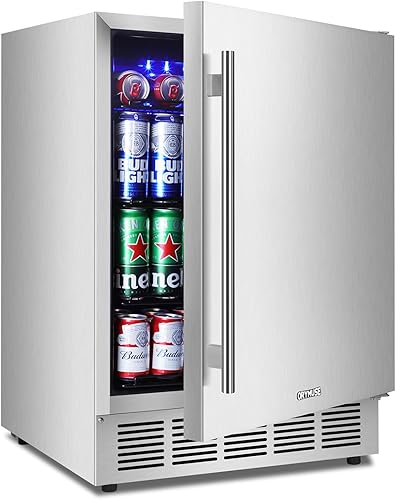
The clearest case for an outdoor refrigerator is a griller who hosts regularly and has a dedicated outdoor kitchen or island setup. Cold beer and soda already at the grill means guests are not coming in and out of the house all afternoon. Keeping marinated proteins chilled right next to the cooking station cuts the back-and-forth that lets food sit at unsafe temperatures longer than it should. A built-in model like the Orymuse HXYC150C (4.4 stars, 136 reviews, $699.99) fits flush under a countertop with its stainless door and four interior racks, which gives you organized shelf space for bottles and covered dishes. If you prep multiple proteins or cook for a crowd on weekends, that kind of organized, close-range cold storage is genuinely useful.
Built-In vs. Freestanding: Which Install Fits Your Setup
Built-in outdoor refrigerators are designed to slide into a cabinetry cutout with front ventilation so heat does not build up behind the unit. They sit flush with the counter for a clean look and are the right choice if you have or plan to have a framed outdoor kitchen island. Freestanding units vent from the back or bottom and need clearance on the sides and rear, so they work best as standalone pieces on a patio or deck rather than inside a closed cabinet. The FoMup FM24T (4.4 stars, 645 reviews, $989.99, freestanding, stainless, 116 lb, 3 racks) is a freestanding unit that works well as a standalone piece alongside an outdoor island or on a covered patio. Forcing a rear-vent freestanding unit into a cabinet can cause overheating and a shortened compressor life, so match the unit type to your install before you buy.
Size and Capacity: What Most Backyard Setups Actually Need
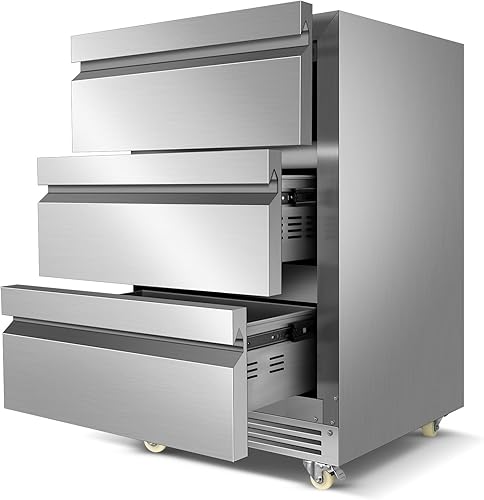
The most common outdoor refrigerator width is 24 inches, which matches standard outdoor kitchen module widths and holds enough for a typical cookout without being excessive. A unit in that range typically provides 4 to 5 cubic feet of storage, enough for two or three dozen cans, a few bottles of wine or condiments, and a tray of marinated meat. The Tylza TYOD150 (4.4 stars, 842 reviews, $799.99, built-in, stainless, 85 lb) fits that standard 24-inch footprint at 22.63 by 23.42 by 34.24 inches and weighs 85 pounds, so two people can manage the install. Going bigger costs more to run and to buy, and most grilling households find that a smaller unit stays organized better than a large one that collects clutter.
What You Will Spend and What the Cost Covers
Entry-level outdoor refrigerators start around $300 to $400 for freestanding units with basic features and fewer reviews to draw from. Mid-range models in the $700 to $1,000 range like the Tylza TYOD150 and Orymuse HXYC150C bring stainless steel construction, built-in install options, and higher review counts that give you more confidence in reliability. Premium undercounter and beverage-center units from brands like Blaze or Zephyr run $1,500 to $2,800 and are built for permanent outdoor kitchen installs with commercial-grade components. Beyond the purchase price, plan for a dedicated outdoor circuit if you do not already have one near the grill area, since running an extension cord to a refrigerator is not a long-term solution and creates a tripping and weather hazard.
When You Can Skip It
A covered cooler, a large rolling ice chest, or even a second indoor fridge in a garage covers most needs if you grill solo or occasionally. If your patio has no roof and the refrigerator would sit in direct rain and full sun with no shade, the maintenance demand goes up and the unit lifespan goes down even with an outdoor-rated model. Renters or anyone whose outdoor kitchen is temporary or portable should also wait, since the investment in a built-in unit does not transfer easily. Finally, if your back door is within 15 feet of the grill, the convenience gap between walking inside and having a fridge on the patio is small enough that most people are fine without one.
Common mistakes to avoid
- Buying an indoor refrigerator to save money and placing it outside, which voids the warranty and burns out the compressor in hot weather.
- Installing a rear-vent freestanding model inside an enclosed cabinet, which traps heat and causes overheating.
- Choosing a unit without confirming the outdoor temperature rating, since some models are only rated down to 50 degrees Fahrenheit ambient and struggle in cold winters.
- Skipping the dedicated electrical circuit and running a long extension cord, which is a power and weather hazard.
- Buying the largest capacity available when a standard 24-inch unit holds everything most backyard setups actually need.
- Ignoring the install type difference between built-in and freestanding before ordering, which forces a return or a cabinet modification.
Frequently asked questions
Can I use a regular indoor refrigerator outside?
Not reliably. Indoor refrigerators are not built for the temperature swings, humidity, and direct weather exposure of an outdoor environment. The compressor is sized for stable indoor ambient temps and typically fails early when pushed to cool against summer heat outside. Most manufacturers void the warranty if the unit is used outdoors.
What is the difference between a beverage center and an outdoor refrigerator?
A beverage center is designed primarily for drinks and typically holds cans and bottles on wire or glass shelves at a slightly warmer set point than a full refrigerator. An outdoor refrigerator runs colder and is suited for storing marinated meat, produce, and condiments alongside drinks. If you only want cold beverages at the grill, a beverage center works well and often costs less.
Does an outdoor refrigerator need its own electrical circuit?
Most outdoor refrigerators draw between 100 and 300 watts and run on a standard 15-amp or 20-amp circuit. Running one from an outdoor outlet on a shared circuit is usually fine as long as nothing else heavy draws from the same breaker at the same time. An extension cord is not a good permanent solution because weathering degrades the cord and creates a shock or fire risk over time.
How cold can an outdoor refrigerator run in winter?
Most outdoor-rated refrigerators are designed for ambient temperatures from about 32 to 110 degrees Fahrenheit, though the specific range varies by model. In climates that drop well below freezing, the fridge may actually get too cold and freeze contents, or the thermostat may stop cycling correctly. Check the manufacturer temperature range for your climate and consider unplugging and covering the unit during hard freezes.
What food storage temperatures should I aim for?
The USDA recommends keeping refrigerated foods at or below 40 degrees Fahrenheit to slow bacterial growth. That applies to outdoor refrigerators the same as indoor ones. Marinated raw meat in particular should stay at 40 degrees or below until it goes on the grill, and should not sit at room temperature for extended periods before cooking.